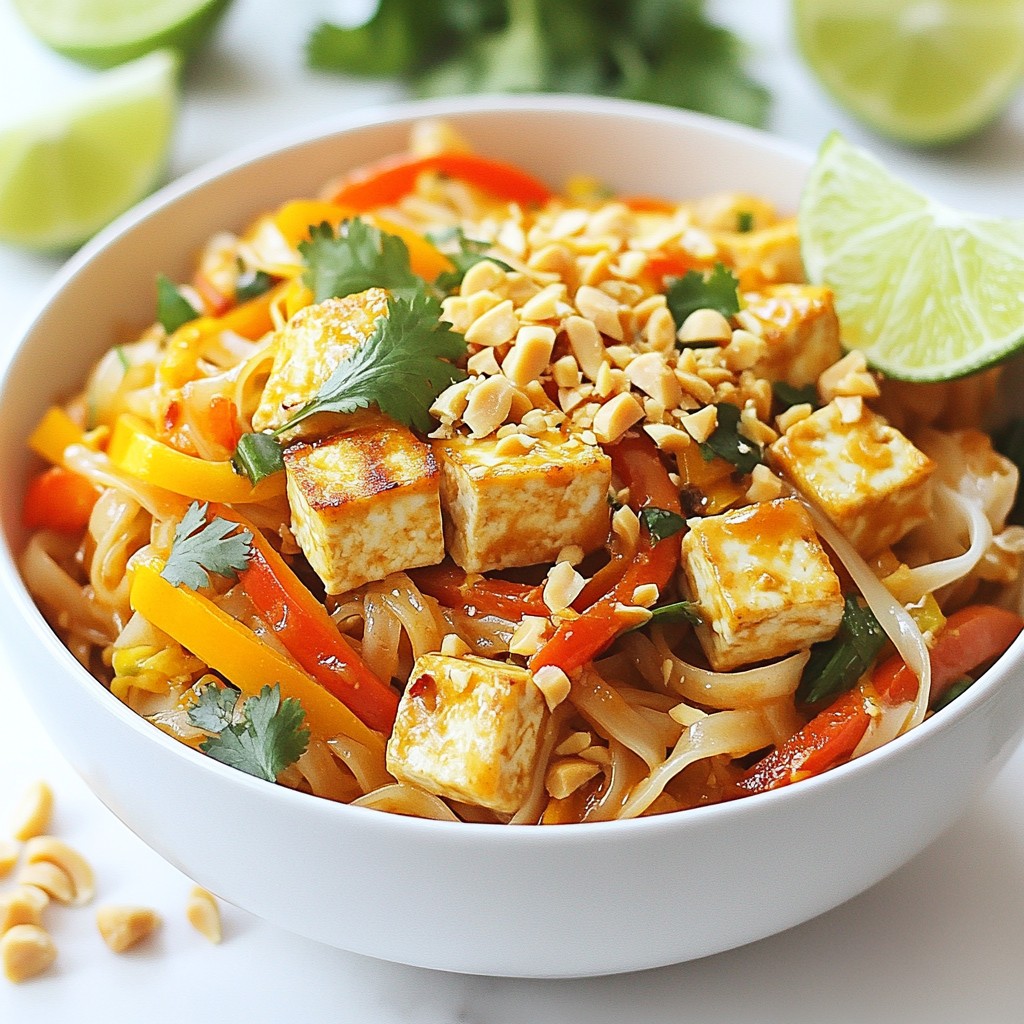
Are you ready to savor a dish that's both savory and flavorful? My Vegan Pad Thai is a delightful stir-fry that delivers on taste without sacrificing your dietary choices. Packed with fresh veggies and rich flavors, it makes a perfect meal for any time of day. Follow this guide for a step-by-step approach, tips for perfecting your dish, and ways to customize your Pad Thai. Let’s dive into this delicious plant-based journey together!
Why I Love This Recipe
- Fresh and Flavorful: This pad Thai is bursting with vibrant colors and fresh ingredients, making it not only delicious but visually appealing.
- Quick and Easy:
- Customizable: You can easily adjust the vegetables or protein to your liking, making it a versatile meal option for everyone.
- Healthy and Nutritious: Packed with vegetables and plant-based protein, this recipe is a wholesome choice that doesn't compromise on taste.
Ingredients
List of Ingredients
- 8 oz rice noodles
- 2 tablespoons vegetable oil
- 3 cloves garlic, minced
- 1 small carrot, julienned
- 1 bell pepper (red or yellow), thinly sliced
- 1 cup bean sprouts
- ½ cup green onions, chopped
- ½ cup firm tofu, cubed
- 3 tablespoons soy sauce
- 1 tablespoon tamarind paste
- 1 tablespoon maple syrup
- 1 tablespoon lime juice
- Crushed peanuts, for garnish
- Fresh cilantro, for garnish
- Lime wedges, for serving
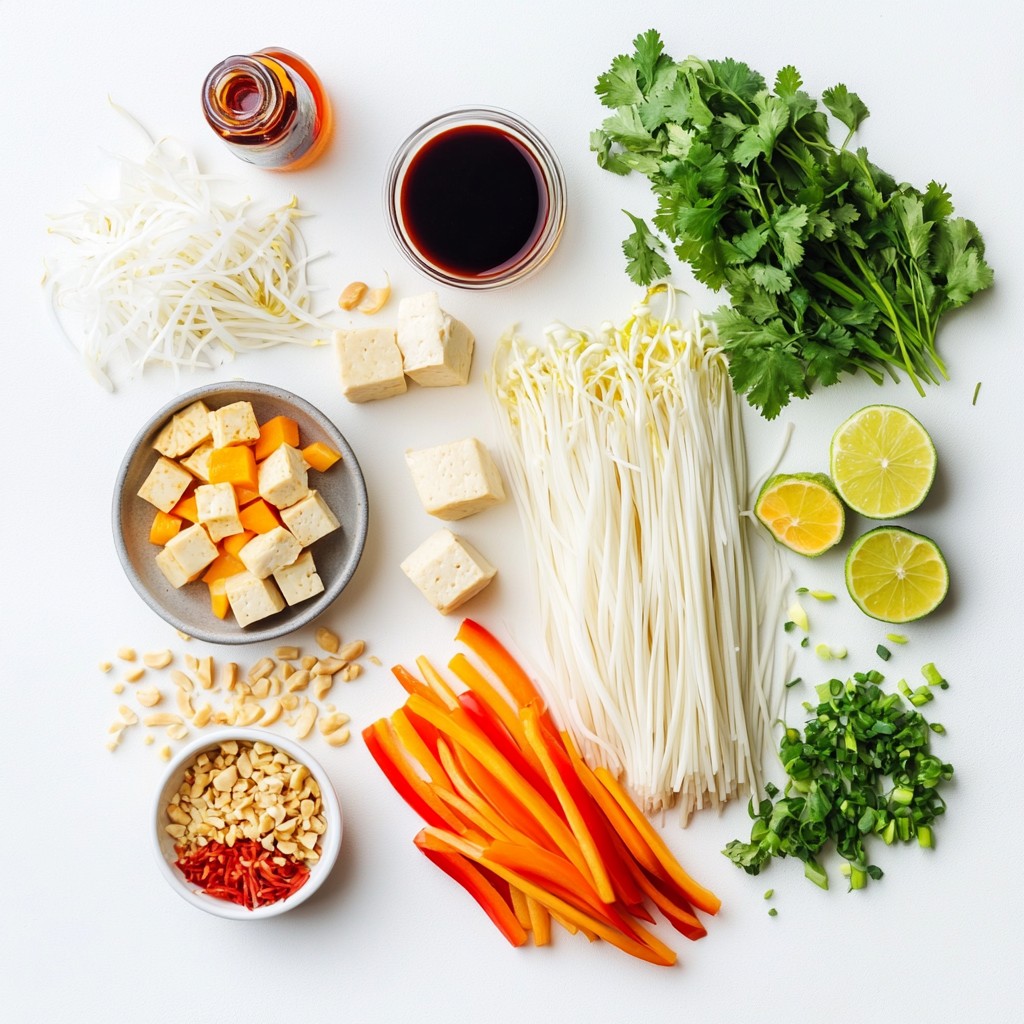
This vegan Pad Thai shines with fresh and colorful ingredients. I love using rice noodles as my base. They soak up all the flavors you add. The vegetable oil helps to sauté the garlic, giving the dish a rich aroma. Fresh garlic is key for depth in taste.
Next, I add julienned carrots and thinly sliced bell peppers. These veggies add crunch and color. They balance the soft noodles and tofu. The bean sprouts bring great texture at the end.
Tofu plays a big role too. I prefer firm tofu for its nice bite. It absorbs all the sauce flavors. Speaking of sauce, it’s a mix of soy sauce, tamarind paste, maple syrup, and lime juice. This combo creates a sweet, sour, and salty flavor burst.
Finally, I garnish with crushed peanuts and fresh cilantro. They add even more flavor and crunch. Lime wedges on the side give that extra zing when serving. Each ingredient works together to create a savory and flavorful stir-fry delight.
Step-by-Step Instructions
Cooking Rice Noodles
To cook rice noodles properly, follow the package instructions. Usually, you soak them in hot water for 5-10 minutes until soft. After soaking, drain the noodles and rinse them under cold water. This stops the cooking and keeps them from sticking together. Set them aside for later.
Preparing the Vegetables and Tofu
Start by heating 2 tablespoons of vegetable oil in a large skillet or wok over medium heat. Add 3 cloves of minced garlic. Sauté for about 30 seconds. You want it fragrant but not burnt. Next, add ½ cup of cubed firm tofu. Cook until it turns golden on all sides, which takes about 5-7 minutes. This gives the tofu a nice texture and flavor.
Then, stir in 1 small julienned carrot and 1 thinly sliced bell pepper. Cook these for 3-4 minutes. You want them slightly soft but still crisp.
Mixing the Sauce
For the Pad Thai sauce, whisk together 3 tablespoons of soy sauce, 1 tablespoon of tamarind paste, 1 tablespoon of maple syrup, and 1 tablespoon of lime juice. This mix should balance sweet, salty, and tangy flavors. Adjust the sauce as needed to fit your taste.
Combining All Ingredients
Now it's time to combine everything. Add the cooked rice noodles to the skillet with the tofu and vegetables. Toss them gently to mix. Make sure the noodles are well-coated with the sauce. After mixing, fold in 1 cup of bean sprouts and half of the chopped green onions. Cook for another 1-2 minutes until everything is heated through. This step gives your Vegan Pad Thai its vibrant look and fresh crunch.
Tips & Tricks
Achieving Authentic Flavor
Tamarind paste is a key player in Vegan Pad Thai. It adds a tangy and sweet taste that makes the dish shine. Use about one tablespoon for the best results. This paste gives the sauce a rich depth that you cannot skip. Fresh lime juice is also vital. It brings brightness and balances flavors. A squeeze of lime before serving will make your dish pop!
Serving Suggestions
Presentation matters! To make your Vegan Pad Thai look great, garnish with crushed peanuts and fresh cilantro. This adds color and texture. You can also sprinkle extra green onions on top. For a complete meal, serve it with a side of spring rolls or a light salad. This adds crunch and freshness.
Common Mistakes to Avoid
Be careful not to overcook your vegetables. They should stay crisp and vibrant. Aim for about three to four minutes of cooking time after adding them to the skillet. Another common mistake is misproportioning sauce ingredients. Make sure to measure each one carefully. A good balance creates the best flavor!
Pro Tips
- Soak Noodles Properly: Be sure to soak the rice noodles in hot water until they're tender but still slightly firm. This prevents them from becoming mushy when stir-frying.
- Customize Your Vegetables: Feel free to swap in your favorite vegetables or whatever is in season. Broccoli, snap peas, or zucchini make great additions!
- Perfect Tofu: For extra crispy tofu, press it before cooking to remove excess moisture and ensure a golden-brown crust.
- Flavor Boost: For a more intense flavor, let the sauce simmer for a minute before adding the noodles. This allows the ingredients to meld beautifully.
Variations
Protein Alternatives
You can use tempeh or seitan instead of tofu. Both add great texture. Tempeh has a nutty taste. It pairs well with the Pad Thai sauce. Seitan is chewy and absorbs flavors nicely. You can marinate it in soy sauce for extra flavor. This swaps traditional tofu with these proteins. You will create new taste profiles. For a spicy kick, add chili paste. For a smoky flavor, try smoked paprika.
Vegetable Substitutions
Use seasonal vegetables for a fresh twist. Try zucchini, snap peas, or broccoli. These add crunch and color. You may need to adjust cooking times. For softer veggies, cook them longer. For crunchier veggies, reduce the cooking time. This keeps them vibrant and full of life. Mixing colors makes the dish more appealing, too.
Gluten-Free Options
To make Vegan Pad Thai gluten-free, swap soy sauce for tamari. Tamari is a gluten-free option that works well. You can also use coconut aminos. It adds sweetness and umami flavor. Just check labels to ensure they are gluten-free. This way, everyone can enjoy this tasty dish.
Storage Info
How to Store Leftovers
To keep your Vegan Pad Thai fresh, store it in an airtight container. Place it in the fridge within two hours of cooking. This helps keep flavors intact. The leftovers will be good for up to three days. Make sure to label the container with the date.
Reheating Tips
When you are ready to eat, reheating is key. Use a nonstick skillet over low heat. Add a splash of water or vegetable broth to help steam the noodles. Stir often to warm it evenly. This method keeps the flavors bright and lively. Avoid microwave reheating if possible. It can make the noodles soggy.
Freezing Instructions
If you want to freeze your Pad Thai, follow these steps. First, let it cool to room temperature. Then, divide it into portions. Use freezer-safe bags or containers. Remove as much air as you can before sealing. This helps prevent freezer burn. It will last up to three months in the freezer.
To thaw, place the container in the fridge overnight. You can reheat it in a skillet as mentioned earlier. Enjoy a tasty meal even from the freezer!
FAQs
Can I make Vegan Pad Thai ahead of time?
Yes, you can make Vegan Pad Thai ahead. It is a great meal prep option. Follow these best practices:
- Cook the noodles: Prepare rice noodles, then cool and store them in the fridge.
- Prep the veggies: Slice and julienne vegetables a day earlier. Keep them in airtight containers.
- Store the sauce: Mix soy sauce, tamarind paste, maple syrup, and lime juice in a jar. Refrigerate it.
- Combine before serving: When ready, heat the oil, cook the tofu, and mix all ingredients. This keeps everything fresh.
What can I use instead of maple syrup?
If you don’t have maple syrup, you have options. Here are some substitutes:
- Agave nectar: It has a similar sweetness and works well in sauces.
- Coconut sugar: This adds a caramel flavor and is a great swap.
- Brown sugar: Dissolve it in a little water for a syrupy texture.
- Date syrup: This offers a rich sweetness and pairs nicely with the dish.
Is Vegan Pad Thai healthy?
Yes, Vegan Pad Thai is healthy. Here’s the nutritional breakdown:
- Rice noodles: Provide carbs for energy.
- Tofu: A great source of protein and healthy fats.
- Veggies: Carrots, bell peppers, and bean sprouts add vitamins and fiber.
Health benefits of a plant-based diet include:
- Lower heart disease risk: Plant foods support heart health.
- Weight management: Higher fiber helps you feel full with fewer calories.
- Improved digestion: A diet rich in fruits and veggies aids digestion.
This article covered key steps to make a tasty vegan Pad Thai. You learned about essential ingredients, cooking tips, and ways to customize your dish. Remember, using fresh ingredients gives the best flavor. Avoid overcooking your veggies. Store leftovers properly to enjoy them later. With practice, you can master this recipe and impress others with your skills. Enjoy your culinary journey and embrace the fun of cooking!