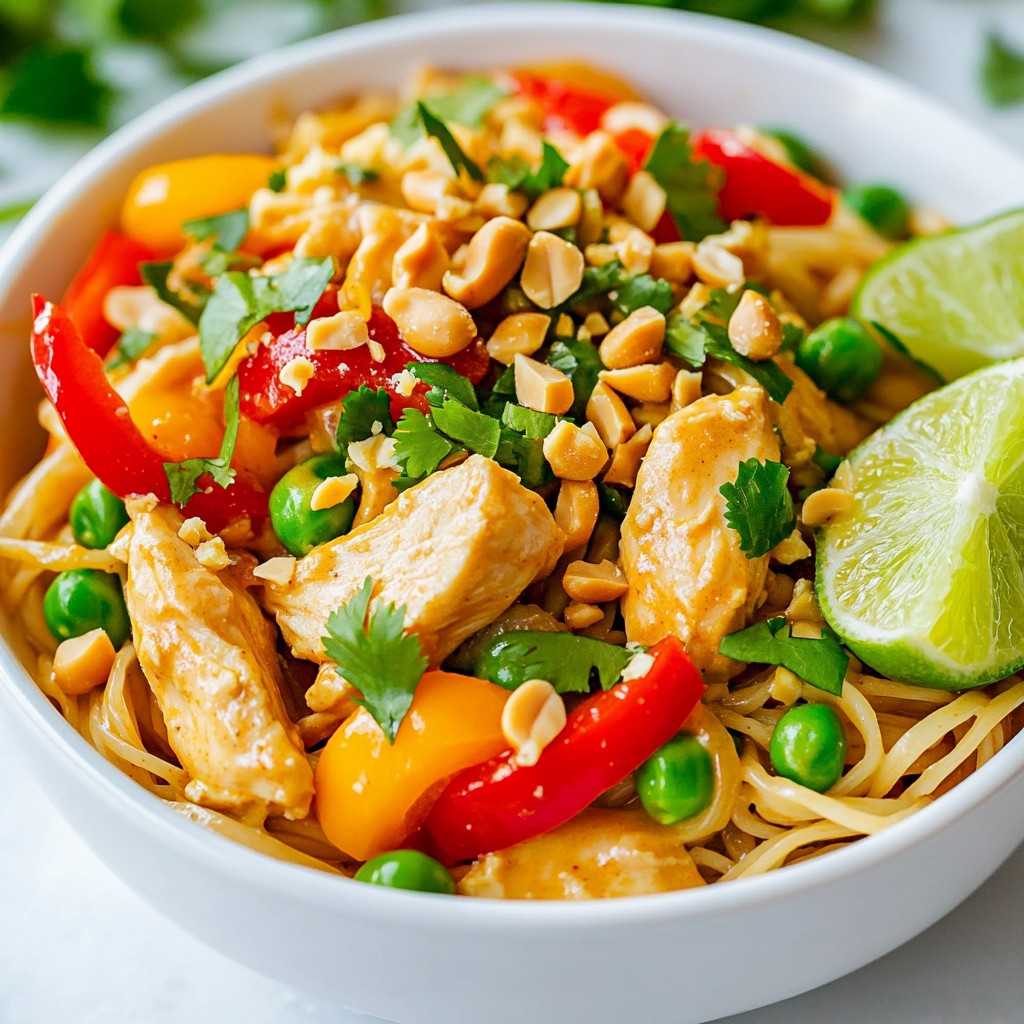
Craving a dish that’s both tasty and easy to make? Look no further! Thai Peanut Chicken Noodles bring together tender chicken, soft rice noodles, and fresh veggies, all coated in a creamy, dreamy peanut sauce. Whether you’re a kitchen newbie or a seasoned pro, this simple meal will wow your taste buds. Join me as we explore this delicious recipe that’s sure to become a family favorite!
Why I Love This Recipe
- Quick and Easy: This recipe comes together in just 30 minutes, making it perfect for weeknight dinners.
- Flavorful Peanut Sauce: The creamy peanut butter sauce adds a rich and savory flavor that elevates the dish.
- Colorful Veggies: The mix of bell peppers and snap peas not only adds vibrant colors but also provides a satisfying crunch.
- Customizable: You can easily modify the ingredients to suit your taste, adding different vegetables or proteins.
Ingredients
Main Ingredients
- 2 boneless, skinless chicken breasts, thinly sliced
- 8 oz rice noodles
- 1 cup bell peppers, julienned (mix of red, yellow, green)
- 1 cup snap peas, trimmed
- 3 green onions, chopped
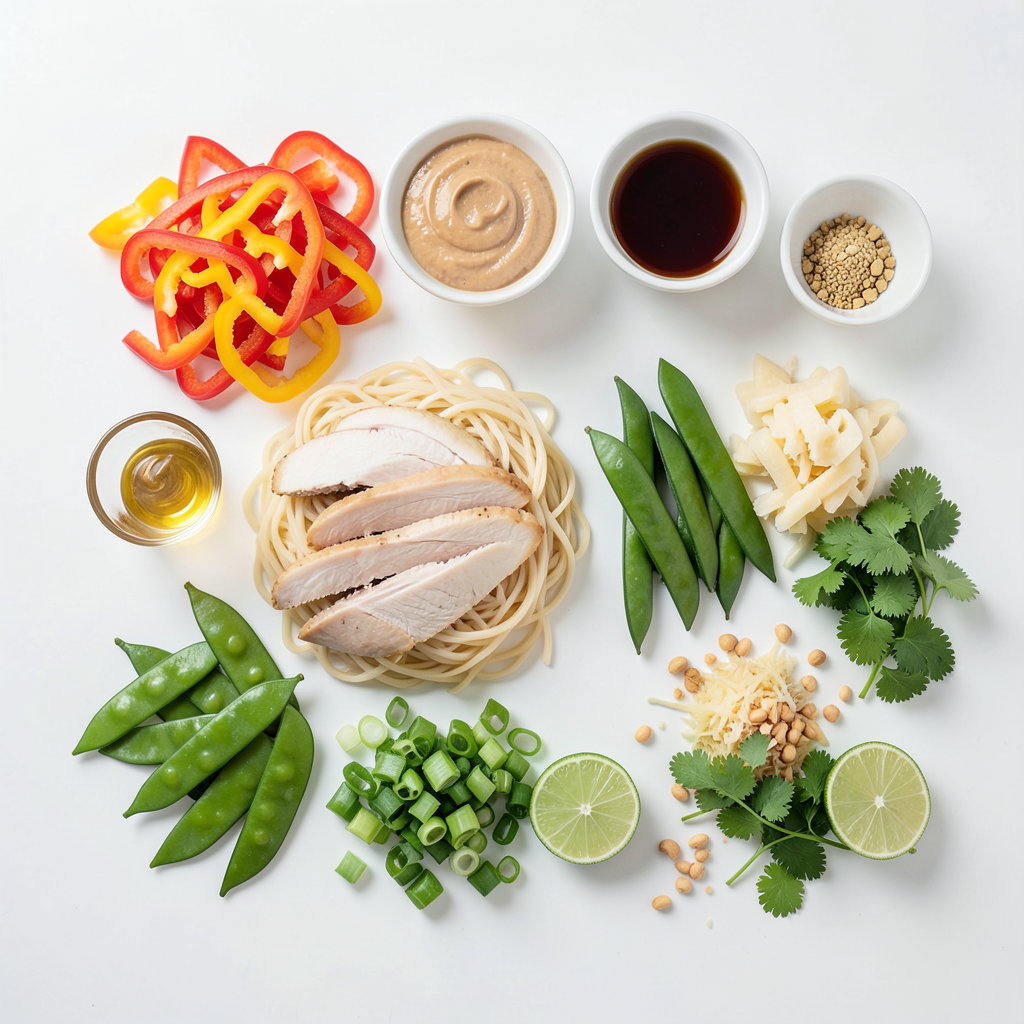
I love using chicken in this dish. It cooks quickly and adds great protein. Rice noodles are perfect for soaking up the sauce. They are light and have a nice texture. Fresh vegetables like bell peppers and snap peas bring color and crunch. They also add vitamins and fiber, making the meal balanced.
Sauce Ingredients
- 1/4 cup creamy peanut butter
- 2 tablespoons soy sauce
- 1 tablespoon honey
- 1 tablespoon lime juice
- 1 tablespoon sesame oil
- 1 garlic clove, minced
- 1 teaspoon fresh ginger, grated
The sauce is the star here. Creamy peanut butter gives it richness. Soy sauce adds salt and umami flavor. Honey brings sweetness, while lime juice adds brightness. Garlic and ginger give it an aromatic kick. Together, these ingredients create a smooth and tasty sauce that coats the noodles perfectly.
Garnishes
- Crushed peanuts for garnish
- Fresh cilantro for garnish
- Lime wedges for serving
Garnishes make this dish pop. Crushed peanuts add a nice crunch. Fresh cilantro brings a burst of freshness. Lime wedges let you add a splash of tang just before eating. These final touches elevate the meal and make it look beautiful on the plate.
Step-by-Step Instructions
Cooking the Noodles
To cook rice noodles properly, follow the package instructions. Usually, this means soaking them in hot water until they are soft. This process takes about 5 to 10 minutes, depending on the brand. Once they are soft, drain the noodles. Make sure to rinse them under cold water. This stops the cooking and keeps them from sticking together. After rinsing, set them aside.
Preparing the Peanut Sauce
To make the peanut sauce, gather your ingredients. In a mixing bowl, combine the creamy peanut butter, soy sauce, honey, lime juice, sesame oil, minced garlic, and grated ginger. Whisk until the mixture is smooth. If the sauce is too thick, add a little warm water. This will help you reach your desired consistency.
Cooking the Chicken and Vegetables
For the chicken, heat a tablespoon of vegetable oil in a large skillet over medium-high heat. Once hot, add the sliced chicken. Cook for about 5-6 minutes until the chicken is fully cooked and lightly golden. Remove the chicken and set it aside. Next, in the same skillet, add the bell peppers and snap peas. Stir-fry these for about 3-4 minutes, or until they are tender-crisp. After that, return the cooked chicken to the skillet. Add the cooked noodles and the peanut sauce. Toss everything together until well coated and heated through. Finally, stir in the chopped green onions before serving.
Tips & Tricks
Perfecting the Peanut Sauce
To make a great peanut sauce, avoid common mistakes. One pitfall is not mixing well. Always whisk until smooth. If your sauce is too thick, add warm water a little at a time. This helps create a nice, creamy texture.
You can also swap ingredients. Try almond butter or sunflower seed butter for a nut-free option. For a spicier kick, mix in some chili paste. Adjust the ingredients to fit your taste and needs.
Cooking Techniques
Choosing the right skillet or wok is key. A non-stick skillet is best for easy cooking and clean-up. A wok can also work well because it heats evenly.
Control the temperature during cooking. Start with medium-high heat. This helps the chicken cook fast and stay juicy. Keep stirring to avoid burning your food.
Serving Suggestions
Pair your dish with fresh salad or steamed broccoli for color and crunch. Rice works nicely too if you want something different.
For presentation, use a large plate. Arrange the noodles in the center and top with chicken and veggies. Sprinkle with crushed peanuts and fresh cilantro. Add lime wedges for a zesty touch. This makes your meal look as good as it tastes!
Pro Tips
- Perfectly Cooked Noodles: To avoid mushy noodles, rinse them under cold water immediately after cooking to stop the cooking process. This helps maintain their texture.
- Adjusting Sauce Consistency: If your peanut sauce is too thick, add warm water a tablespoon at a time until you reach your desired consistency for easy mixing.
- Chicken Cooking Tip: For even cooking, make sure the chicken slices are uniform in thickness. This ensures they cook through at the same rate.
- Garnishing Ideas: Enhance your dish's visual appeal and flavor by adding extra crushed peanuts and fresh cilantro just before serving.
Variations
Protein Swaps
You can easily change the protein in this dish. If you want a plant-based option, use tofu. Just press and cube it before cooking. For a seafood twist, shrimp works great too. Cook shrimp until they turn pink and opaque.
You can make this dish vegetarian by sticking to tofu, or you can go vegan by skipping the chicken and using only veggies.
Noodle Substitutions
Rice noodles are traditional, but you can swap them out. Try using whole wheat noodles for a heartier meal. If you need a gluten-free option, rice vermicelli noodles are perfect. They cook fast and soak up flavors well.
Even zoodles, or zucchini noodles, are a fun twist. They add a fresh crunch and lighten up the dish.
Flavor Enhancements
Want more flavor? Adding spices can kick it up a notch. A pinch of chili flakes or a dash of sriracha brings heat. Start small and taste as you go.
Don’t forget to add more veggies! Carrots, broccoli, or baby corn can add color and texture. Toss them in when you stir-fry the bell peppers and snap peas. This way, you pack in more nutrients and flavor.
Storage Info
Refrigeration Tips
To keep your Thai Peanut Chicken Noodles fresh, store leftovers in an airtight container. This helps prevent the noodles from drying out. Place the dish in the fridge within two hours of cooking. Leftovers are best when eaten within 3 to 4 days. If you wait longer, the flavors may change, and the noodles can get mushy.
Freezing Instructions
You can freeze your Thai Peanut Chicken Noodles if you want to save some for later. First, let the dish cool down completely. Then, divide it into servings and place them in freezer-safe bags or containers. Make sure to remove as much air as possible to avoid freezer burn. Your noodles can stay good in the freezer for up to three months.
When you're ready to eat, take a portion out and let it thaw overnight in the fridge. To reheat, you can use a skillet over medium heat or the microwave. If it seems dry, add a splash of water or soy sauce to bring back the creaminess. Enjoy your meal just as tasty as the first time!
FAQs
What is the best way to reheat Thai Peanut Chicken Noodles?
To reheat Thai Peanut Chicken Noodles, use a skillet. Add a splash of water or broth. Heat on medium until warm. Stir often to keep noodles from sticking. This method helps maintain texture and flavor. You can also use a microwave. Place in a bowl and cover it. Heat in short bursts. Stir in between to heat evenly.
Can I make Thai Peanut Chicken Noodles ahead of time?
Yes, you can make Thai Peanut Chicken Noodles ahead of time. Cook and store in an airtight container. Keep it in the fridge for up to three days. For meal prep, cook the chicken and veggies separately. Store the sauce and noodles in separate containers. Combine everything when ready to eat for fresh taste.
What can I substitute for peanut butter?
You can use almond butter or cashew butter as substitutes. They both have creamy textures and a nice taste. Sunflower seed butter is a great nut-free option. Each alternative gives a different flavor profile but will work well in the dish. Adjust the amount based on your taste preference.
This article covered making Thai Peanut Chicken Noodles, from key ingredients to cooking tips. You learned how to cook rice noodles, mix the peanut sauce, and cook the chicken and veggies. I also shared storage tips and various ways to adapt the dish.
Experiment with flavors and ingredients to make this meal your own. With practice, you’ll create a delicious bowl every time. Enjoy the process, and savor each bite!