
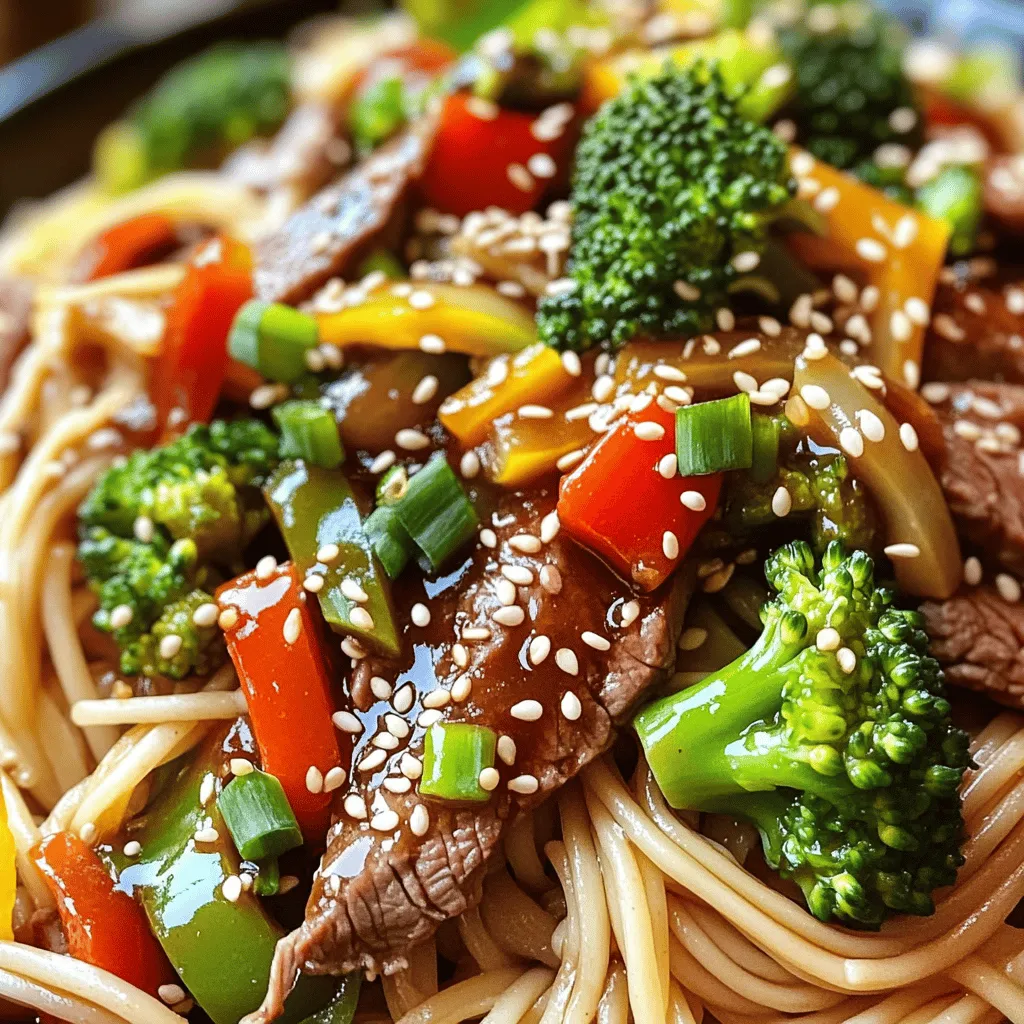
Mongolian Beef Noodles Flavorful and Quick Recipe

WANT TO SAVE THIS RECIPE?

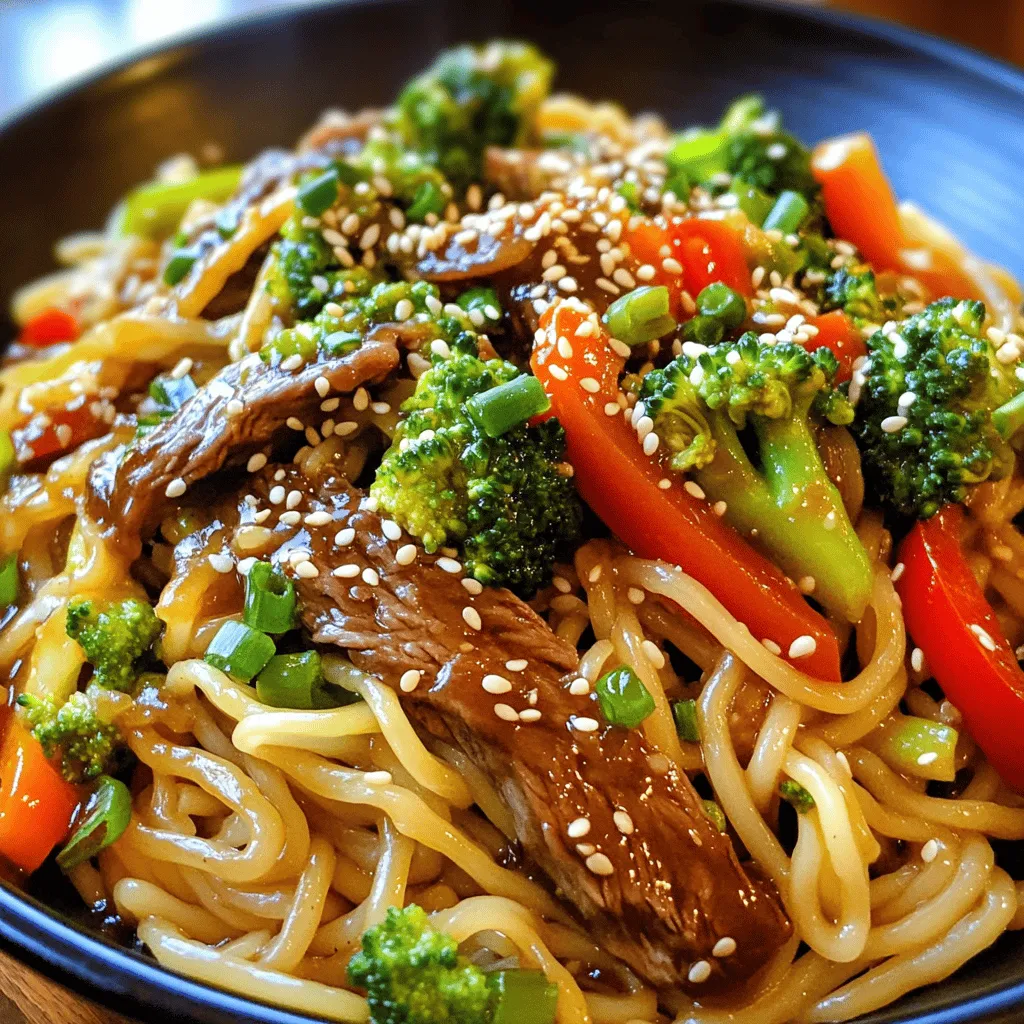
If you’re craving a delicious meal that’s quick to make, try Mongolian Beef Noodles. This tasty dish features tender flank steak, flavorful sauces, and fresh veggies—all tossed with wide rice noodles. In this easy recipe, I’ll guide you step by step to create a dinner that impresses without any stress. Let’s turn your kitchen into a savory haven with this delightful meal!

- 8 oz wide rice noodles - 1 lb flank steak, thinly sliced against the grain - 1 bell pepper (red or green), sliced - 1 cup broccoli florets Mongolian beef noodles use wide rice noodles. These noodles soak up flavors well. Flank steak adds a rich taste. Slice it thinly for quick cooking. Fresh vegetables like bell peppers and broccoli add color and crunch. - 2 tablespoons soy sauce - 1/4 cup hoisin sauce - 1 tablespoon chili paste (adjust for spice preference) Soy sauce gives the dish a savory kick. Hoisin sauce adds sweetness and depth. Chili paste brings heat. You can adjust the chili based on your spice level. - 3 green onions, chopped - Sesame seeds, for garnish Green onions add a fresh taste. They also give a pop of color. Sesame seeds add a nice crunch. They make the dish look appealing. These ingredients come together to create a tasty meal. Each one plays a key role in flavor and texture. Enjoy your cooking adventure! To start, you need to marinate the flank steak. This step adds flavor and helps tenderize the meat. In a small bowl, mix 2 tablespoons of soy sauce with 1 tablespoon of cornstarch. Toss the thinly sliced flank steak in this mix until it is well coated. Let it sit for about 15 minutes. This simple process makes a big difference in taste. Next, you will cook the rice noodles. Boil water in a pot, then add 8 ounces of wide rice noodles. Follow the package instructions, usually boiling for about 5-7 minutes. You want them soft but not mushy. Once cooked, drain them and set aside. They will soak up the sauce later. Now, it's time to stir-fry the veggies. Heat 2 tablespoons of vegetable oil in a large skillet or wok over medium-high heat. When the oil is hot, add the marinated beef in a single layer. Sauté for 2-3 minutes until the beef is browned. Set the beef aside. In the same skillet, add 1 sliced bell pepper and 1 cup of broccoli florets. Stir-fry for 3-4 minutes until they are just tender. Next, add 3 minced garlic cloves and 1-inch grated ginger. Stir quickly for about 30 seconds until you can smell the aroma. This mix of flavors will make your dish pop. To bring it all together, return the cooked beef to the skillet. Now, add 1/4 cup of hoisin sauce and 1 tablespoon of chili paste. Mix well to combine everything. Finally, add the cooked noodles and toss gently. Make sure the noodles are coated in the sauce and heated through. Remove the skillet from heat and stir in 3 chopped green onions. Garnish with sesame seeds before serving. This dish is ready to enjoy! To make your flank steak shine, marination is key. Use soy sauce and cornstarch. The soy adds flavor, while cornstarch makes the meat tender. Coat the beef well and let it sit for 15 minutes. This time allows the flavors to seep in. When cooking, heat your skillet until it’s hot. This helps the beef brown nicely. Cook it in one layer for best results. Cooking rice noodles can be tricky. Follow the package instructions closely. Usually, they need about 5 to 7 minutes in boiling water. Check them often to avoid overcooking. You want them tender, but not mushy! Once cooked, drain them well. This keeps them from sticking together later. Chili paste adds heat to the dish. Start with one tablespoon, then taste it. If you want more spice, add a bit more. Remember, you can always add heat, but it’s hard to take it away. Adjusting the chili paste helps you find your perfect balance. Enjoy the flavors as they blend in your Mongolian beef noodles! {{image_2}} You can change the protein in Mongolian Beef Noodles for a new taste. Chicken works well. Use thin slices of chicken breast instead of flank steak. Tofu is a great choice for a vegetarian option. Firm tofu soaks up flavors well. For seafood lovers, try shrimp. Cook the shrimp until pink and tender, then mix it in. Adding more veggies can boost flavor and nutrition. Carrots add crunch and sweetness. Snow peas give a fresh taste. Mushrooms bring umami, while bok choy adds a nice green touch. You can also toss in spinach for extra color and health benefits. Feel free to mix and match your favorites! If you need gluten-free noodles, there are easy swaps. Rice noodles are already gluten-free, making them a perfect choice. You can also try zucchini noodles for a low-carb option. Simply spiralize zucchini and cook it lightly. These alternatives keep the dish tasty while meeting dietary needs. To keep your Mongolian Beef Noodles fresh, store leftovers in an airtight container. Let the dish cool to room temperature before sealing it. This helps prevent moisture build-up. You can keep them in the fridge for up to three days. If you want to store them longer, consider freezing. Just make sure to use a freezer-safe container. Reheating your Mongolian Beef Noodles is easy. The best method is to use a skillet. Heat a small amount of oil over medium heat. Add the noodles and stir frequently until they are hot. You can also use a microwave if you are short on time. Place the noodles in a microwave-safe bowl and cover it. Heat for one to two minutes, stirring halfway through. This ensures even heating. Preparing Mongolian Beef Noodles ahead of time can save you time later. You can marinate the flank steak the night before. Store it in the fridge to soak in the flavors. You can also chop the vegetables in advance. Store them in airtight bags or containers. Cook the noodles when you are ready to eat. This keeps everything fresh and tasty. You can enjoy many tasty sides with Mongolian beef noodles. Here are a few ideas: - Steamed dumplings: They add great flavor and texture. - Egg rolls: Crispy and delicious, they're perfect for dipping. - Sesame cucumber salad: A refreshing choice that balances the rich noodles. - Fried rice: A classic that pairs well with the beef. Mongolian beef noodles can be spicy, but it depends on how much chili paste you use. If you want less heat, use less chili paste. You can also add it slowly and taste as you go. For those who love spice, add more chili paste for a kick. Adjust it to fit your taste! Yes, you can use different noodles. Here are some choices: - Udon noodles: They are thick and chewy, adding a nice bite. - Soba noodles: These are made from buckwheat and have a unique taste. - Egg noodles: They are soft and soak up sauce well. Feel free to experiment with what you have at home! Mongolian beef noodles offer a rich blend of flavors and textures. You now know the key ingredients, from wide rice noodles to flank steak. The step-by-step guide ensures you cook each element perfectly. Don't forget the tips to enhance your dish, like marinating well and adjusting spice levels. Feel free to explore variations and alternatives for protein and vegetables. Proper storage and reheating can keep your meal fresh. Enjoy creating this dish that’s sure to impress. Cooking can be simple and fun with the right approach. Dive in and savor every bite!

Ingredients

Main Ingredients for Mongolian Beef Noodles

– 8 oz wide rice noodles

– 1 lb flank steak, thinly sliced against the grain

– 1 bell pepper (red or green), sliced

– 1 cup broccoli florets

Mongolian beef noodles use wide rice noodles. These noodles soak up flavors well. Flank steak adds a rich taste. Slice it thinly for quick cooking. Fresh vegetables like bell peppers and broccoli add color and crunch.

Sauces and Seasonings

– 2 tablespoons soy sauce

– 1/4 cup hoisin sauce

– 1 tablespoon chili paste (adjust for spice preference)

Soy sauce gives the dish a savory kick. Hoisin sauce adds sweetness and depth. Chili paste brings heat. You can adjust the chili based on your spice level.

Optional Garnishes

– 3 green onions, chopped

– Sesame seeds, for garnish

Green onions add a fresh taste. They also give a pop of color. Sesame seeds add a nice crunch. They make the dish look appealing.

These ingredients come together to create a tasty meal. Each one plays a key role in flavor and texture. Enjoy your cooking adventure!

Step-by-Step Instructions

Preparing the Flank Steak

To start, you need to marinate the flank steak. This step adds flavor and helps tenderize the meat. In a small bowl, mix 2 tablespoons of soy sauce with 1 tablespoon of cornstarch. Toss the thinly sliced flank steak in this mix until it is well coated. Let it sit for about 15 minutes. This simple process makes a big difference in taste.

Cooking the Rice Noodles

Next, you will cook the rice noodles. Boil water in a pot, then add 8 ounces of wide rice noodles. Follow the package instructions, usually boiling for about 5-7 minutes. You want them soft but not mushy. Once cooked, drain them and set aside. They will soak up the sauce later.

Stir-Frying the Veggies

Now, it’s time to stir-fry the veggies. Heat 2 tablespoons of vegetable oil in a large skillet or wok over medium-high heat. When the oil is hot, add the marinated beef in a single layer. Sauté for 2-3 minutes until the beef is browned. Set the beef aside. In the same skillet, add 1 sliced bell pepper and 1 cup of broccoli florets. Stir-fry for 3-4 minutes until they are just tender.

Next, add 3 minced garlic cloves and 1-inch grated ginger. Stir quickly for about 30 seconds until you can smell the aroma. This mix of flavors will make your dish pop.

Combining Ingredients

To bring it all together, return the cooked beef to the skillet. Now, add 1/4 cup of hoisin sauce and 1 tablespoon of chili paste. Mix well to combine everything. Finally, add the cooked noodles and toss gently. Make sure the noodles are coated in the sauce and heated through. Remove the skillet from heat and stir in 3 chopped green onions. Garnish with sesame seeds before serving. This dish is ready to enjoy!

Tips & Tricks

Achieving the Best Flavors

To make your flank steak shine, marination is key. Use soy sauce and cornstarch. The soy adds flavor, while cornstarch makes the meat tender. Coat the beef well and let it sit for 15 minutes. This time allows the flavors to seep in. When cooking, heat your skillet until it’s hot. This helps the beef brown nicely. Cook it in one layer for best results.

Cooking Noodles Perfectly

Cooking rice noodles can be tricky. Follow the package instructions closely. Usually, they need about 5 to 7 minutes in boiling water. Check them often to avoid overcooking. You want them tender, but not mushy! Once cooked, drain them well. This keeps them from sticking together later.

Spicing to Taste

Chili paste adds heat to the dish. Start with one tablespoon, then taste it. If you want more spice, add a bit more. Remember, you can always add heat, but it’s hard to take it away. Adjusting the chili paste helps you find your perfect balance. Enjoy the flavors as they blend in your Mongolian beef noodles!
Variations

Protein Alternatives

You can change the protein in Mongolian Beef Noodles for a new taste. Chicken works well. Use thin slices of chicken breast instead of flank steak. Tofu is a great choice for a vegetarian option. Firm tofu soaks up flavors well. For seafood lovers, try shrimp. Cook the shrimp until pink and tender, then mix it in.

Vegetable Additions

Adding more veggies can boost flavor and nutrition. Carrots add crunch and sweetness. Snow peas give a fresh taste. Mushrooms bring umami, while bok choy adds a nice green touch. You can also toss in spinach for extra color and health benefits. Feel free to mix and match your favorites!

Gluten-Free Options

If you need gluten-free noodles, there are easy swaps. Rice noodles are already gluten-free, making them a perfect choice. You can also try zucchini noodles for a low-carb option. Simply spiralize zucchini and cook it lightly. These alternatives keep the dish tasty while meeting dietary needs.

Storage Info

Refrigeration Guidelines

To keep your Mongolian Beef Noodles fresh, store leftovers in an airtight container. Let the dish cool to room temperature before sealing it. This helps prevent moisture build-up. You can keep them in the fridge for up to three days. If you want to store them longer, consider freezing. Just make sure to use a freezer-safe container.

Reheating Instructions

Reheating your Mongolian Beef Noodles is easy. The best method is to use a skillet. Heat a small amount of oil over medium heat. Add the noodles and stir frequently until they are hot. You can also use a microwave if you are short on time. Place the noodles in a microwave-safe bowl and cover it. Heat for one to two minutes, stirring halfway through. This ensures even heating.

Meal Prep Tips

Preparing Mongolian Beef Noodles ahead of time can save you time later. You can marinate the flank steak the night before. Store it in the fridge to soak in the flavors. You can also chop the vegetables in advance. Store them in airtight bags or containers. Cook the noodles when you are ready to eat. This keeps everything fresh and tasty.

FAQs

What can I serve with Mongolian Beef Noodles?

You can enjoy many tasty sides with Mongolian beef noodles. Here are a few ideas:

Steamed dumplings: They add great flavor and texture.

Egg rolls: Crispy and delicious, they’re perfect for dipping.

Sesame cucumber salad: A refreshing choice that balances the rich noodles.

Fried rice: A classic that pairs well with the beef.

Is Mongolian Beef Noodles spicy?

Mongolian beef noodles can be spicy, but it depends on how much chili paste you use. If you want less heat, use less chili paste. You can also add it slowly and taste as you go. For those who love spice, add more chili paste for a kick. Adjust it to fit your taste!

Can I use other types of noodles?

Yes, you can use different noodles. Here are some choices:

Udon noodles: They are thick and chewy, adding a nice bite.

Soba noodles: These are made from buckwheat and have a unique taste.

Egg noodles: They are soft and soak up sauce well.

Feel free to experiment with what you have at home!

Mongolian beef noodles offer a rich blend of flavors and textures. You now know the key ingredients, from wide rice noodles to flank steak. The step-by-step guide ensures you cook each element perfectly. Don’t forget the tips to enhance your dish, like marinating well and adjusting spice levels.

Feel free to explore variations and alternatives for protein and vegetables. Proper storage and reheating can keep your meal fresh. Enjoy creating this dish that’s sure to impress. Cooking can be simple and fun with the right approach. Dive in and savor every bite!
- 8 oz wide rice noodles - 1 lb flank steak, thinly sliced against the grain - 1 bell pepper (red or green), sliced - 1 cup broccoli florets Mongolian beef noodles use wide rice noodles. These noodles soak up flavors well. Flank steak adds a rich taste. Slice it thinly for quick cooking. Fresh vegetables like bell peppers and broccoli add color and crunch. - 2 tablespoons soy sauce - 1/4 cup hoisin sauce - 1 tablespoon chili paste (adjust for spice preference) Soy sauce gives the dish a savory kick. Hoisin sauce adds sweetness and depth. Chili paste brings heat. You can adjust the chili based on your spice level. - 3 green onions, chopped - Sesame seeds, for garnish Green onions add a fresh taste. They also give a pop of color. Sesame seeds add a nice crunch. They make the dish look appealing. These ingredients come together to create a tasty meal. Each one plays a key role in flavor and texture. Enjoy your cooking adventure! To start, you need to marinate the flank steak. This step adds flavor and helps tenderize the meat. In a small bowl, mix 2 tablespoons of soy sauce with 1 tablespoon of cornstarch. Toss the thinly sliced flank steak in this mix until it is well coated. Let it sit for about 15 minutes. This simple process makes a big difference in taste. Next, you will cook the rice noodles. Boil water in a pot, then add 8 ounces of wide rice noodles. Follow the package instructions, usually boiling for about 5-7 minutes. You want them soft but not mushy. Once cooked, drain them and set aside. They will soak up the sauce later. Now, it's time to stir-fry the veggies. Heat 2 tablespoons of vegetable oil in a large skillet or wok over medium-high heat. When the oil is hot, add the marinated beef in a single layer. Sauté for 2-3 minutes until the beef is browned. Set the beef aside. In the same skillet, add 1 sliced bell pepper and 1 cup of broccoli florets. Stir-fry for 3-4 minutes until they are just tender. Next, add 3 minced garlic cloves and 1-inch grated ginger. Stir quickly for about 30 seconds until you can smell the aroma. This mix of flavors will make your dish pop. To bring it all together, return the cooked beef to the skillet. Now, add 1/4 cup of hoisin sauce and 1 tablespoon of chili paste. Mix well to combine everything. Finally, add the cooked noodles and toss gently. Make sure the noodles are coated in the sauce and heated through. Remove the skillet from heat and stir in 3 chopped green onions. Garnish with sesame seeds before serving. This dish is ready to enjoy! To make your flank steak shine, marination is key. Use soy sauce and cornstarch. The soy adds flavor, while cornstarch makes the meat tender. Coat the beef well and let it sit for 15 minutes. This time allows the flavors to seep in. When cooking, heat your skillet until it’s hot. This helps the beef brown nicely. Cook it in one layer for best results. Cooking rice noodles can be tricky. Follow the package instructions closely. Usually, they need about 5 to 7 minutes in boiling water. Check them often to avoid overcooking. You want them tender, but not mushy! Once cooked, drain them well. This keeps them from sticking together later. Chili paste adds heat to the dish. Start with one tablespoon, then taste it. If you want more spice, add a bit more. Remember, you can always add heat, but it’s hard to take it away. Adjusting the chili paste helps you find your perfect balance. Enjoy the flavors as they blend in your Mongolian beef noodles! {{image_2}} You can change the protein in Mongolian Beef Noodles for a new taste. Chicken works well. Use thin slices of chicken breast instead of flank steak. Tofu is a great choice for a vegetarian option. Firm tofu soaks up flavors well. For seafood lovers, try shrimp. Cook the shrimp until pink and tender, then mix it in. Adding more veggies can boost flavor and nutrition. Carrots add crunch and sweetness. Snow peas give a fresh taste. Mushrooms bring umami, while bok choy adds a nice green touch. You can also toss in spinach for extra color and health benefits. Feel free to mix and match your favorites! If you need gluten-free noodles, there are easy swaps. Rice noodles are already gluten-free, making them a perfect choice. You can also try zucchini noodles for a low-carb option. Simply spiralize zucchini and cook it lightly. These alternatives keep the dish tasty while meeting dietary needs. To keep your Mongolian Beef Noodles fresh, store leftovers in an airtight container. Let the dish cool to room temperature before sealing it. This helps prevent moisture build-up. You can keep them in the fridge for up to three days. If you want to store them longer, consider freezing. Just make sure to use a freezer-safe container. Reheating your Mongolian Beef Noodles is easy. The best method is to use a skillet. Heat a small amount of oil over medium heat. Add the noodles and stir frequently until they are hot. You can also use a microwave if you are short on time. Place the noodles in a microwave-safe bowl and cover it. Heat for one to two minutes, stirring halfway through. This ensures even heating. Preparing Mongolian Beef Noodles ahead of time can save you time later. You can marinate the flank steak the night before. Store it in the fridge to soak in the flavors. You can also chop the vegetables in advance. Store them in airtight bags or containers. Cook the noodles when you are ready to eat. This keeps everything fresh and tasty. You can enjoy many tasty sides with Mongolian beef noodles. Here are a few ideas: - Steamed dumplings: They add great flavor and texture. - Egg rolls: Crispy and delicious, they're perfect for dipping. - Sesame cucumber salad: A refreshing choice that balances the rich noodles. - Fried rice: A classic that pairs well with the beef. Mongolian beef noodles can be spicy, but it depends on how much chili paste you use. If you want less heat, use less chili paste. You can also add it slowly and taste as you go. For those who love spice, add more chili paste for a kick. Adjust it to fit your taste! Yes, you can use different noodles. Here are some choices: - Udon noodles: They are thick and chewy, adding a nice bite. - Soba noodles: These are made from buckwheat and have a unique taste. - Egg noodles: They are soft and soak up sauce well. Feel free to experiment with what you have at home! Mongolian beef noodles offer a rich blend of flavors and textures. You now know the key ingredients, from wide rice noodles to flank steak. The step-by-step guide ensures you cook each element perfectly. Don't forget the tips to enhance your dish, like marinating well and adjusting spice levels. Feel free to explore variations and alternatives for protein and vegetables. Proper storage and reheating can keep your meal fresh. Enjoy creating this dish that’s sure to impress. Cooking can be simple and fun with the right approach. Dive in and savor every bite!
Mongolian Beef Noodles

Savor the delicious flavors of Mongolian Beef Noodles with this easy recipe! This dish features tender flank steak, fresh veggies, and wide rice noodles all coated in a savory hoisin sauce. Perfect for a cozy dinner, it takes just 40 minutes to prepare. Ready to elevate your weeknight meals? Click through to explore the full recipe and bring this tasty dish to your table tonight! Your taste buds will thank you!

Ingredients
  

8 oz wide rice noodles

1 lb flank steak, thinly sliced against the grain

2 tablespoons soy sauce

1 tablespoon cornstarch

3 tablespoons vegetable oil, divided

1 bell pepper (red or green), sliced

1 cup broccoli florets

3 cloves garlic, minced

1-inch piece ginger, grated

1/4 cup hoisin sauce

1 tablespoon chili paste (adjust for spice preference)

3 green onions, chopped

Sesame seeds, for garnish

Instructions
 

In a small bowl, combine the soy sauce with cornstarch and toss the sliced flank steak until well coated. Let marinate for 15 minutes.

    Cook the wide rice noodles according to the package instructions, usually boiling for about 5-7 minutes until tender. Drain and set aside.

      Heat 2 tablespoons of vegetable oil in a large skillet or wok over medium-high heat. Once hot, add the marinated beef in a single layer and sauté for 2-3 minutes until browned and cooked to your liking. Remove from the skillet and set aside.

        In the same skillet, add the remaining tablespoon of oil, and toss in the sliced bell pepper and broccoli florets. Stir-fry for 3-4 minutes until they are just tender.

          Add minced garlic and grated ginger to the pan, stirring quickly for about 30 seconds until fragrant.

            Return the cooked beef to the skillet, then add the hoisin sauce and chili paste. Mix well to combine everything.

              Add the cooked noodles to the pan and toss gently until the noodles are well coated in the sauce and heated through.

                Remove the skillet from heat, and stir in chopped green onions. Garnish with sesame seeds before serving.

                  Prep Time: 20 min | Total Time: 40 min | Servings: 4

                    WANT TO SAVE THIS RECIPE?