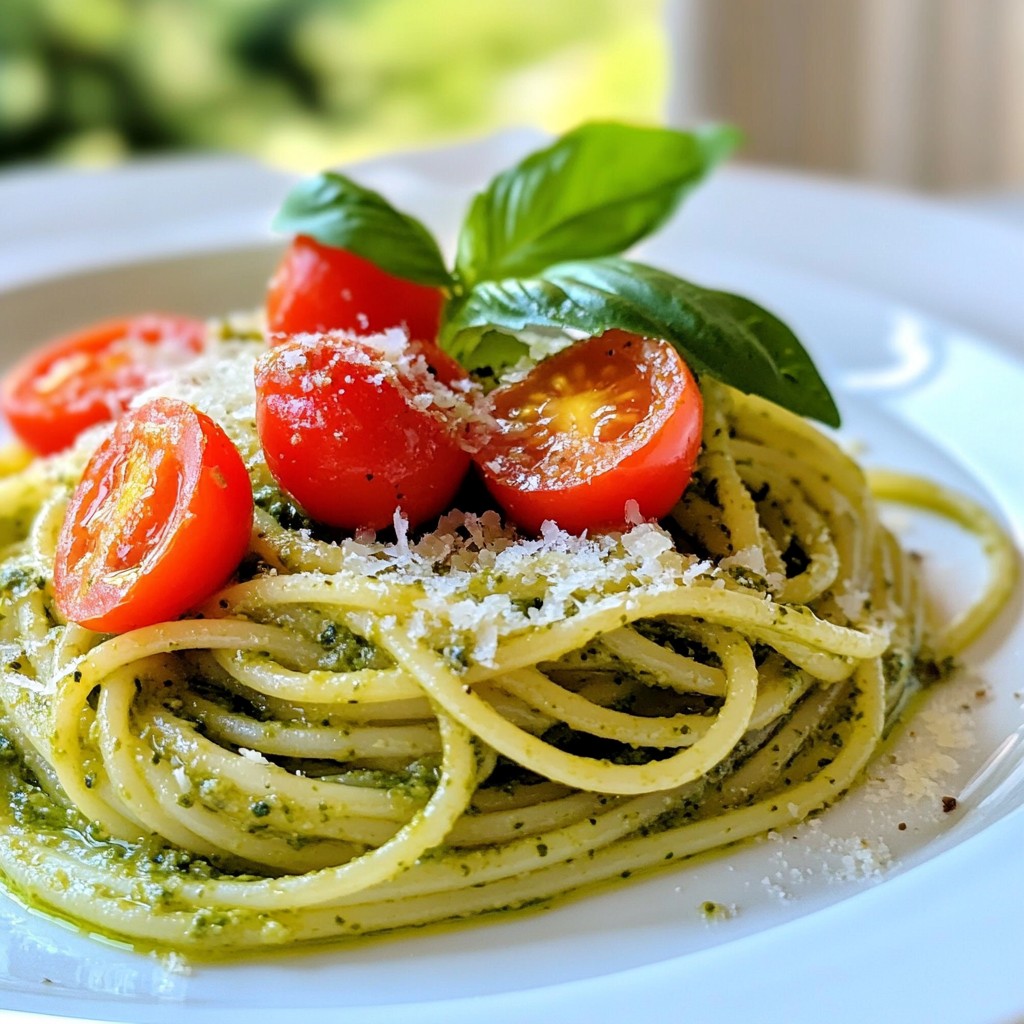
If you're craving a quick and tasty meal, you can't go wrong with Classic Basil Pesto Pasta. This simple recipe combines fresh basil, garlic, and nuts into a vibrant sauce that bursts with flavor. I'll guide you through each step, ensuring you achieve a perfect dish every time. Let’s dive into the world of homemade pesto and discover how easy it is to elevate your pasta game!
Why I Love This Recipe
- Fresh Flavor: The vibrant taste of fresh basil combined with garlic creates a deliciously aromatic dish that is unforgettable.
- Quick and Easy: With just a few simple ingredients and minimal prep time, this recipe is perfect for busy weeknights or last-minute gatherings.
- Customizable: You can easily adjust the ingredients to suit your taste, adding more cheese, nuts, or even a spicy kick with red pepper flakes.
- Healthy and Wholesome: Packed with fresh ingredients, this pasta dish is not only tasty but also a nutritious option for any meal.
Ingredients
Main Ingredients for Classic Basil Pesto Pasta
- 400g spaghetti or your favorite pasta
- 2 cups fresh basil leaves, packed
- 1/2 cup extra virgin olive oil
- 1/3 cup pine nuts, lightly toasted
- 1/2 cup Parmigiano-Reggiano cheese, grated
- 3 garlic cloves, minced
- Salt and pepper to taste
- Cherry tomatoes (for garnish)
- Additional basil leaves (for garnish)
The ingredients are simple but full of flavor. Fresh basil is key. It gives pesto that bright, herbal taste. Extra virgin olive oil adds richness. Pine nuts bring a nice, nutty crunch. Parmigiano-Reggiano cheese gives a savory depth. Garlic adds warmth and spice.
When you choose your pasta, pick what you love. Spaghetti works great, but you can try penne or fettuccine too. This dish is all about balance. Each ingredient plays a role. The fresh basil shines, while the cheese and nuts create a creamy sauce.
Make sure your basil is fresh and bright green. This will make your pesto pop. Toasting the pine nuts helps their flavor stand out too.
You can also add a twist by using cherry tomatoes for garnish. They add a sweet touch and color. Fresh basil leaves on top make it look pretty.
These ingredients are the heart of your classic basil pesto pasta. They come together to create a dish that is both simple and delicious.
Step-by-Step Instructions
Cooking the Pasta
1. Boil salted water and add spaghetti: Fill a large pot with water. Add a good amount of salt. Bring it to a boil. Once boiling, add the spaghetti.
2. Cook pasta to al dente: Check the package for cooking time. Cook until the spaghetti is tender but still firm. This is called al dente.
3. Reserve pasta water before draining: Before you drain the pasta, scoop out one cup of pasta water. This water helps make the sauce. Then, drain the pasta in a colander.
Preparing the Pesto
1. Combine basil, pine nuts, cheese, and garlic in a food processor: In the food processor, add fresh basil leaves, toasted pine nuts, grated cheese, and minced garlic.
2. Pulse until finely chopped: Turn on the food processor and pulse the mix. Stop once it is finely chopped, but not a paste.
Emulsifying the Pesto
1. Gradually add olive oil while processing: Keep the food processor running. Slowly pour in the olive oil. This makes the pesto creamy and smooth.
2. Adjust thickness with reserved pasta water as needed: If the pesto seems thick, add a little reserved pasta water. Blend until you reach the desired consistency.
Mixing Pasta and Pesto
1. Combine drained pasta with pesto: In a big bowl, add the drained pasta. Spoon the pesto over the pasta.
2. Adjust consistency with pasta water if required: If you need it creamier, add more reserved pasta water. Toss the pasta until it is well coated.
Serving the Dish
1. Plate and garnish with cherry tomatoes and basil: Serve the pasta in bowls. Top with halved cherry tomatoes and extra basil leaves for a fresh look.
Tips & Tricks
Perfecting the Pesto
To make great pesto, choose fresh, high-quality ingredients. Fresh basil gives the best flavor. Look for deep green leaves without brown spots. Use extra virgin olive oil for a rich taste. The oil should smell fruity and fresh. Select good Parmigiano-Reggiano cheese for a savory kick.
Toasting pine nuts enhances their nutty flavor. Place them in a dry skillet over low heat. Stir often to prevent burning. When they turn golden, remove them from the heat. Let them cool before adding to your pesto.
Cooking Pasta Tips
To avoid overcooking spaghetti, follow the package instructions closely. Start testing the pasta a minute or two before the suggested time. It should be firm but not hard.
Always reserve some pasta water before draining. This starchy water helps mix the pesto and pasta. It also helps adjust the sauce's thickness if needed.
Enhancing Flavor
You can add more flavor by including a pinch of red pepper flakes. They add a nice kick without overpowering the dish. For a twist, try adding lemon juice or zest for brightness.
To add texture, consider mixing in some chopped walnuts or sunflower seeds. These give a nice crunch. You can also toss in some sautéed vegetables, like zucchini or bell peppers, for a colorful touch.
Pro Tips
- Use Fresh Ingredients: Fresh basil and high-quality olive oil significantly enhance the flavor of your pesto, making it vibrant and aromatic.
- Toast Your Nuts: Lightly toasting the pine nuts before blending brings out their natural oils and adds a depth of flavor to your pesto.
- Adjust Consistency: If your pesto is too thick, don’t hesitate to add a little reserved pasta water to achieve the desired creamy texture.
- Variation Ideas: Experiment with different nuts like walnuts or almonds, or add other herbs like parsley for a unique twist on the classic recipe.
Variations
Alternative Pasta Choices
You can use many types of pasta for classic basil pesto. Here are some great options:
- Penne
- Fusilli
- Farfalle
- Zucchini noodles (for a low-carb choice)
- Gluten-free pasta
These alternatives add variety and can change the dish's texture. Each pasta shape holds the pesto differently, giving you a unique experience each time.
Dietary Modifications
If you need gluten-free options, choose any gluten-free pasta. Many brands make this easy. Check the label to ensure it meets your needs.
For vegan options, you can skip the cheese. Try these substitutes:
- Nutritional yeast for a cheesy flavor
- Cashew cream for creaminess
- Vegan cheese made from nuts
These swaps make the dish just as tasty while fitting different diets.
Flavor Twists
To make your pesto pasta more exciting, you can add some fun flavors. Here are two great ideas:
- Add sun-dried tomatoes for a Mediterranean twist. They add sweetness and depth.
- If you like spice, toss in red pepper flakes. These give a nice kick that elevates the dish.
These twists can turn a simple meal into something special.
Storage Info
Storing Leftovers
To keep your basil pesto pasta fresh, store it in an airtight container. Make sure it cools down before sealing it. Place a layer of plastic wrap directly on the pasta. This helps keep the air out. Store it in the fridge. It should last for about three days. If you see any discoloration, it’s best to toss it.
Freezing Pesto
If you want to save pesto for later, freezing is a great option. First, spoon the pesto into an ice cube tray. This makes it easy to use only what you need. Once frozen, pop the cubes into a freezer bag. Label the bag with the date. Pesto can last up to six months in the freezer. Just remember to thaw it in the fridge before using.
Reheating Tips
When reheating your pasta, do it gently. Start by adding a splash of olive oil to a pan. Heat it over low heat. Add the pasta and toss it to warm up. If it seems dry, add a bit of reserved pasta water. This helps to keep the flavor and texture just right. You can also microwave it, but cover it with a damp paper towel to prevent drying out.
FAQs
What can I substitute for pine nuts in pesto?
If you have nut allergies or don't like pine nuts, you have many options. You can use sunflower seeds, walnuts, or cashews. Each nut or seed brings a unique flavor to your pesto. You can also skip the nuts entirely and use more cheese for creaminess.
Can I make pesto without a food processor?
Yes, you can make pesto without a food processor. You can use a mortar and pestle to grind the ingredients. Just chop the basil and garlic fine first. You can also use a blender, but it might take longer to get the right texture.
How long does homemade pesto last in the fridge?
Homemade pesto lasts about one week in the fridge. Store it in an airtight container. To keep it fresh, add a thin layer of olive oil on top. This helps prevent browning and keeps the flavors bright.
What other dishes can I use pesto in?
Pesto is very versatile. You can use it in many dishes. Try it on sandwiches, in salads, or as a topping for grilled meats. It's also great with roasted vegetables or as a dip for bread. Use your creativity, and enjoy the flavors!
In this blog post, we explored how to make classic basil pesto pasta. You learned the main ingredients, step-by-step cooking instructions, and tips for perfection. Exploring variations and storage options offers flexibility for your meals.
Pesto pasta is simple yet delicious. With fresh ingredients, you can enjoy great taste. I hope you feel ready to create this dish in your kitchen. Enjoy making and sharing great food!